

U.S.
Based

Veteran
Owned
Quality Career Training provides practical online training for Design Quality Engineer professionals working in Medical Laboratories. In this role, common responsibilities include reviewing design requirements, evaluating risks, and maintaining evidence of design verification and change control. Method consistency, instrument status, sample identification, and reliable records help make testing results defensible.
 Whether you’re an experienced Design Quality Engineer, preparing for greater responsibility, or building new quality and compliance skills, QCT provides focused professional training you can complete online.
Explore training in FDA regulations, ISO standards, Quality Management Systems, Statistical Process Control, sampling plans, auditing, compliance, and process improvement.
Use the coupon code LimitedTime20 for 20% off your first order, with no limit on how many courses you purchase. This code will expire on January 31, 2027. Use the coupon code on the CART page prior to checkout. Please leave a review after course completion.
COPY LimitedTime20 and browse all courses.A Design Quality Engineer may be responsible for reviewing design requirements, evaluating risks, and maintaining evidence of design verification and change control.
Useful areas of study include Design controls, risk-based quality planning, documentation, and verification. Explore the course catalog to select training relevant to your actual responsibilities.
 Professional Training for Process Development Engineer in Automotive & Transportation
 Medical Device Quality Systems Training for Quality Systems Manager
 Supplier Quality Training for Process Validation Engineer
 21 CFR Part 820 Training for Process Development Scientist
 Professional Training for Environmental Manager in Human Tissue Banking
 21 CFR Part 210 Training for Production Supervisor
 Medical Device Quality Systems Training for ISO Auditor
 Professional Training for Operations Manager in Cell Therapy
 Process Improvement Training for Document Control Specialist
 Supplier Quality Training for Manufacturing Manager
 Good Manufacturing Practices Training for Validation Engineer
 Control Charts Training for Production Supervisor
 Supplier Quality Training for Process Development Scientist
 Quality Engineering Training for Environmental Specialist
 Professional Training for Quality Systems Manager in Laboratory Testing
 Professional Training for Process Improvement Engineer in Contract Manufacturing
Strong quality systems depend on people who understand how processes are established, controlled, evaluated, and improved to meet organizational, customer, and regulatory requirements.
As a Design Quality Engineer working in Medical Laboratories, you may encounter FDA requirements, ISO standards, internal procedures, customer requirements, and other quality or regulatory frameworks.
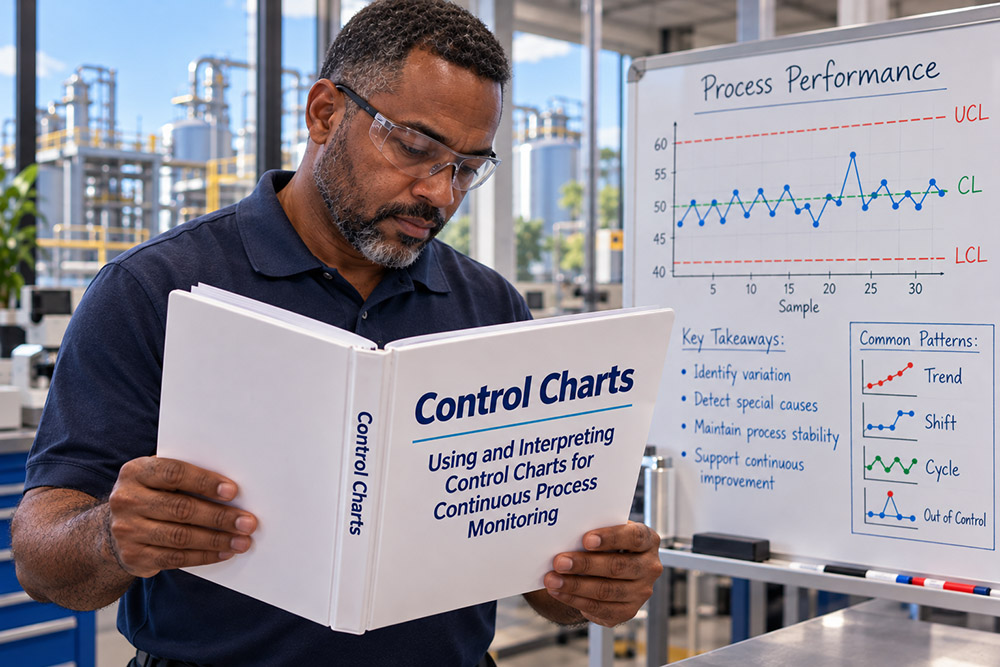
Understanding variation, sampling, control charts, corrective action, auditing, and process performance can help you make better decisions and support measurable improvement.
Professionals in this position may be involved in reviewing design requirements, evaluating risks, and maintaining evidence of design verification and change control.
Method consistency, instrument status, sample identification, and reliable records help make testing results defensible.
For a Design Quality Engineer in Medical Laboratories, a practical exercise could be to: Trace a design change from its requirements through review, verification, and approved documentation. A separate industry-specific exercise is to: Check whether an unexpected result is associated with sample handling, equipment, or method records.
Role-related subjects include Design controls, risk-based quality planning, documentation, and verification. Industry-related subjects include Sampling plans, control charts, data integrity, and auditing. Not every standard applies to every organization or job.
The responsibilities of a Design Quality Engineer vary by employer. Common work may include reviewing design requirements, evaluating risks, and maintaining evidence of design verification and change control. In Medical Laboratories, Method consistency, instrument status, sample identification, and reliable records help make testing results defensible.
QCT’s online courses make it easier to build or refresh specialized knowledge without committing to a lengthy traditional training program.
Organizations in Medical Laboratories rely on people who understand quality, consistency, documentation, process controls, and the compliance requirements that apply to their work.
As a Design Quality Engineer, understanding how these systems work together can be an important part of supporting product quality and overall performance.
QCT courses range from widely used quality methods such as Statistical Process Control and sampling plans to specialized training covering FDA regulations and ISO standards.
Because the courses are online, you can build relevant skills on your own schedule and work through the material at a pace that works for you.
Quality Career Training provides online courses for people working in quality, regulatory compliance, manufacturing, auditing, engineering, laboratory, and related technical careers.
If you’re a Design Quality Engineer working in Medical Laboratories, explore training that fits your responsibilities, industry requirements, and professional development goals.
For this position, relevant subjects can include Design controls, risk-based quality planning, documentation, and verification. Which courses are appropriate depends on your employer and duties.
In Medical Laboratories, relevant subjects may include Sampling plans, control charts, data integrity, and auditing. Requirements vary by organization, product, and responsibilities.
Yes. QCT’s courses are online and designed for working professionals. You can search our available training to find subjects that fit your work and responsibilities as a Design Quality Engineer.
Yes. Organizations in Medical Laboratories depend on people who understand how quality systems, processes, documentation, specifications, standards, and compliance requirements work together to produce consistent results.
Depending on your responsibilities, useful subjects may include Statistical Process Control, control charts, sampling plans, Quality Management Systems, ISO standards, FDA regulations, auditing, CAPA, compliance, and process improvement.
Quality and compliance training can be useful for engineers, managers, supervisors, auditors, regulatory professionals, compliance personnel, manufacturing employees, laboratory personnel, consultants, and others responsible for product or process quality.
Yes. Whether you’re refreshing your existing knowledge, preparing for greater responsibility, or building expertise in a new area, QCT courses can help you develop practical knowledge in quality, regulatory, statistical, and process-related subjects.
Yes. QCT offers courses covering selected FDA regulations that apply to regulated industries. Search our current course catalog to see the FDA training that’s available.
Yes. QCT offers training on selected ISO standards covering quality management, medical devices, environmental management, and other professional applications.
QCT provides online professional courses for people working in quality, compliance, manufacturing, regulatory, engineering, and related careers. Search our Medical Laboratories training or browse all available courses to find training that fits your professional goals.
Connect with our company and partners on LinkedIn, where we'll address industry-relevant topics, share news, and announce new courses and site features.
Enroll today and start your journey toward certification with Quality Career Training.
Start Now