
U.S.
Based

Veteran
Owned
Regulatory Compliance is the ongoing process of identifying and meeting the laws and regulations that apply to an organization’s products, services, and operations.

Quality Career Training provides online Regulatory Compliance training for professionals working as a Process Engineer. Common responsibilities in this role include measuring process performance, investigating variation, and improving repeatability through documented changes.
Understanding Regulatory Compliance can help professionals apply relevant quality principles, technical methods, standards, or regulatory requirements in their work.
Use the coupon code LimitedTime20 for 20% off your first order, with no limit on how many courses you purchase. This code will expire on January 31, 2027. Use the coupon code on the CART page prior to checkout. Please leave a review after course completion.
COPY LimitedTime20 and browse all courses.Build your knowledge of Regulatory Compliance through convenient, self-paced online training.

Organizations maintain regulatory compliance by identifying applicable obligations, establishing procedures, monitoring changes, and retaining evidence of conformity.
Training related to Regulatory Compliance can help professionals develop knowledge in the following areas:
Interpreting requirements, conducting compliance reviews, maintaining records, and evaluating regulatory changes.
Other subjects relevant to this position include Statistical Process Control, control charts, sampling plans, and continuous improvement.
Outdated procedures and incomplete compliance assessments can expose organizations to violations and corrective actions.
A Process Engineer may be involved in measuring process performance, investigating variation, and improving repeatability through documented changes. The relevance of Regulatory Compliance depends on the organization’s activities and the responsibilities assigned to the position.
A compliance specialist identifies a revised regulatory requirement and determines which internal procedures and employee training materials must be updated.
For a Process Engineer, a relevant professional activity might involve the following:
Compare baseline and post-change process measurements to verify whether an improvement is sustained.
Additional subjects that complement Regulatory Compliance include FDA Compliance, Internal Auditing, Document Control.
Quality Career Training offers self-paced online courses covering ISO standards, FDA regulations, auditing, Quality Management Systems, statistical methods, and other specialized professional topics.
Explore the available courses to find training appropriate for your responsibilities and professional development goals.
View Regulatory Compliance TrainingRegulatory Compliance is the ongoing process of identifying and meeting the laws and regulations that apply to an organization’s products, services, and operations.
Learn more about Regulatory Compliance on Wikipedia.
Responsibilities for this position may include measuring process performance, investigating variation, and improving repeatability through documented changes. Training in Regulatory Compliance may provide useful knowledge when the subject relates to those duties or the organization’s requirements.
Relevant areas of knowledge include Interpreting requirements, conducting compliance reviews, maintaining records, and evaluating regulatory changes.. Actual course content and learning objectives vary by course.
Quality Career Training provides self-paced online courses for professionals working in quality assurance, quality control, regulatory compliance, manufacturing, auditing, engineering, and related fields. Explore the available Regulatory Compliance training.

Cybersecurity is no longer just an IT concern. Recent cyberattacks affecting major medical device companies have demonstrated how cyber incidents can disrupt manufacturing operations, order [...]
Read More ►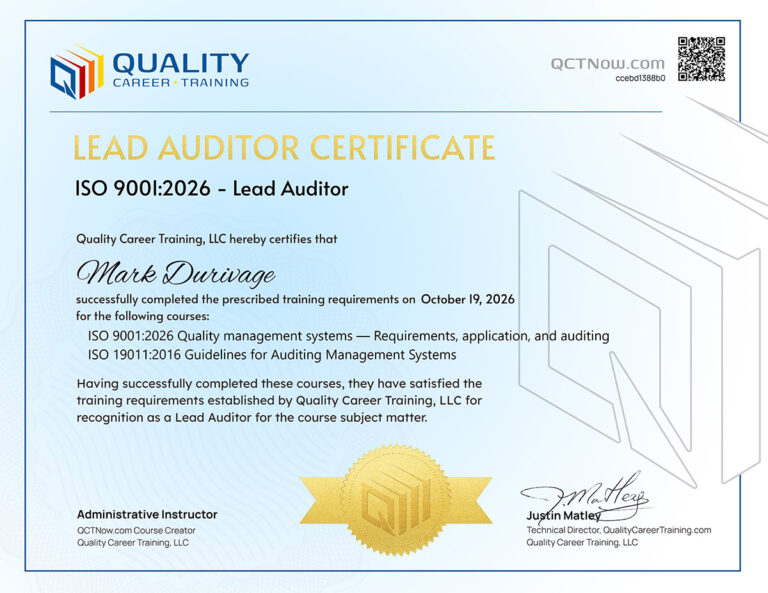
Maybe you’ve worked in manufacturing or quality control for a few years and you’re looking for your next opportunity. Or perhaps you’ve met someone who [...]
Read More ►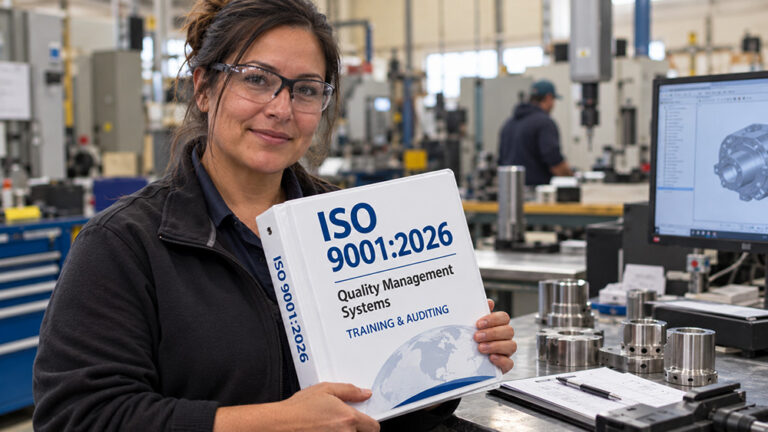
With ISO 9001:2026 now published, organizations should begin evaluating their quality management systems (QMS) against the updated requirements. While the transition period provides time for [...]
Read More ►Connect with our company and partners on LinkedIn, where we'll address industry-relevant topics, share news, and announce new courses and site features.
Enroll today and start your journey toward certification with Quality Career Training.
Start Now