

How to Become an ISO Auditor: Training, Qualifications, and Career Opportunities
Maybe you’ve worked in manufacturing or quality control for a few years and you’re looking for your next opportunity. Or perhaps you’ve met someone who works as an ISO auditor and wondered what it takes to get into that line of work.
Either way, becoming an ISO auditor might be more achievable than you think.
ISO auditors help businesses evaluate how well their processes work, whether they’re meeting established requirements, and where improvements are needed. It’s a career that combines problem-solving, communication, and attention to detail.
You don’t necessarily need a college degree to get started, and experience in manufacturing, quality assurance, operations, or other technical fields can give you a head start.
Let’s look at what ISO auditors actually do, how to become one, what the job pays, and where this career could take you.
What Does an ISO Auditor Actually Do?
Imagine visiting a manufacturing facility to find out whether its quality management system is working as intended.
You might start by reviewing procedures and production records. Then you’d speak with employees, observe how work is performed, and compare what you find with the requirements of an ISO standard, such as ISO 9001.
You’re not there simply to catch people making mistakes. You’re there to gather evidence, determine whether requirements are being met, and report what you find.
Some auditors work internally, evaluating their own employer’s processes. Others audit suppliers or work for certification bodies that assess organizations against ISO standards.
The work can involve a combination of office time, facility visits, interviews, documentation, and occasional travel. It’s a good fit for someone who’s curious about how things work and comfortable asking questions.
How to Become an ISO Auditor in 5 Steps
There’s no single career path that every ISO auditor follows. Some start in quality assurance, while others come from production, engineering, compliance, or management. Here’s a practical way to get started.
1. Build on Your Existing Experience
If you’ve worked in manufacturing, quality control, inspections, operations, or another regulated environment, you may already have useful experience.
Understanding how businesses operate, follow procedures, maintain records, and address problems is an important part of auditing.
If you’re completely new to these subjects, that’s okay too. You can begin by learning the fundamentals of quality management systems.
2. Choose an ISO Standard to Learn
ISO publishes standards covering many different types of management systems. You don’t need to learn all of them.
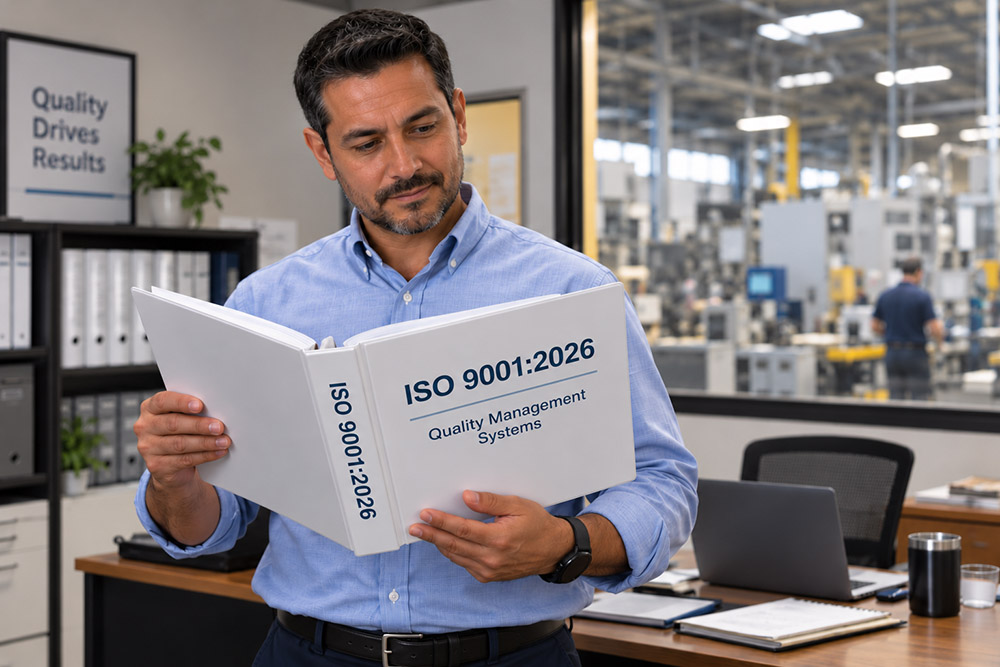
ISO 9001, which focuses on quality management systems, is often a good starting point because it applies to organizations across many industries.
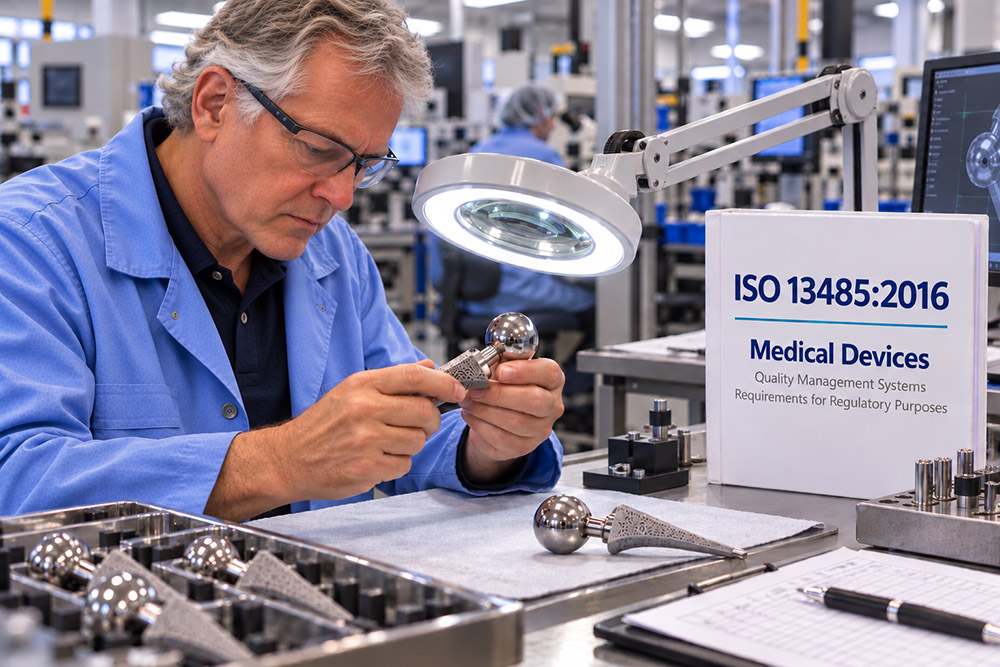
Other standards worth considering include ISO 13485 for medical device quality management and ISO 14001 for environmental management systems.
3. Complete ISO Auditor Training
Once you’ve chosen a standard, you’ll need to understand its requirements and learn how to conduct an audit.
ISO 19011 provides guidance on auditing management systems, including planning audits, gathering evidence, interviewing personnel, documenting findings, and evaluating auditor competence.
Our ISO 19011 Auditing Management Systems training can help you develop that foundation.
4. Get Some Hands-On Auditing Experience
Training is important, but experience is what helps you become comfortable conducting audits.
If your employer has an internal auditing program, ask whether you can participate. You might begin by observing an audit, helping review documents, or working alongside an experienced auditor.
Over time, you’ll learn how to ask effective questions, recognize potential problems, and document your findings clearly.
5. Work Toward Lead Auditor Responsibilities
Once you’ve developed auditing experience, you may want to take on more responsibility.
Lead auditors coordinate audit activities, manage audit teams, communicate with management, and oversee the reporting of audit findings.
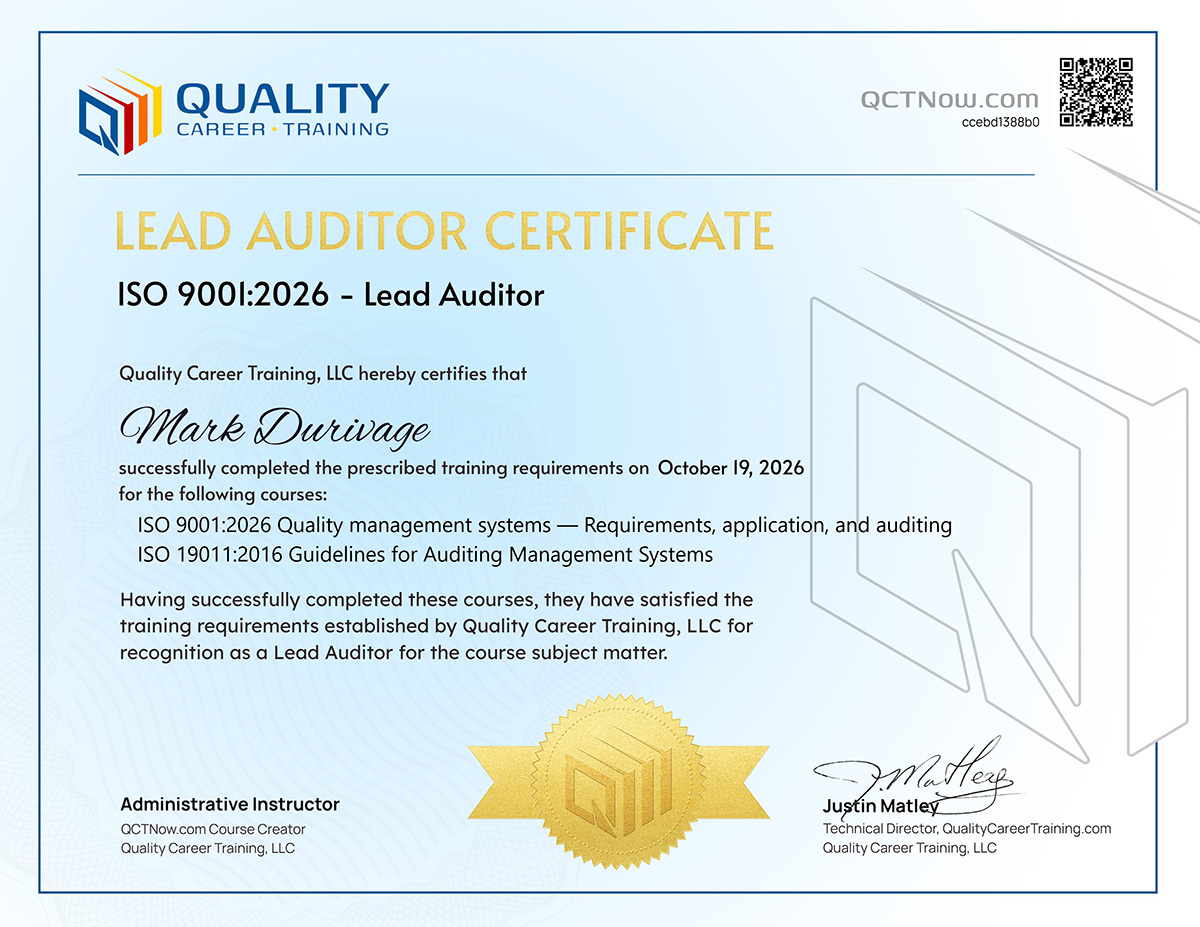
Our ISO 9001 Lead Auditor Training Bundle combines ISO 9001 quality management training with ISO 19011 auditing guidance. It’s a convenient way to study both subjects and earn verifiable certificates of completion.
Keep in mind that completing training doesn’t automatically qualify you to conduct third-party certification audits. Those positions may require additional experience, competency assessments, and approval from a certification body.
Where Can You Work as an ISO Auditor?
One of the appealing things about ISO auditing is that the skills can transfer between industries.
Manufacturing is a major area of opportunity, but organizations in many other fields also rely on ISO management systems.
Industries that commonly need auditing professionals include:
- Manufacturing and industrial production
- Medical devices and healthcare-related manufacturing
- Aerospace and defense
- Automotive manufacturing and suppliers
- Construction and engineering
- Electronics and semiconductor manufacturing
- Pharmaceuticals and biotechnology
- Food and beverage production
- Environmental services
Some auditors spend most of their time at one facility. Others travel between company locations, visit suppliers, or work with different organizations as consultants or third-party auditors.
What ISO Auditor Jobs Should You Look For?
If you’re exploring job opportunities, don’t limit your search to the title “ISO Auditor.” Employers often use different titles for positions involving similar skills.
Try searching for these positions:
- Internal Quality Auditor
- Quality Systems Auditor
- ISO 9001 Auditor
- Supplier Quality Auditor
- Quality Assurance Specialist
- Compliance Auditor
- Lead Auditor
- Quality Systems Manager
Not every position requires the same qualifications. Some are entry-level or involve assisting experienced auditors, while others require several years of industry experience and professional credentials.
Reviewing actual job descriptions is one of the best ways to understand what employers expect in your industry.
How Much Do ISO Auditors Make?
ISO auditing can offer a rewarding career, but salaries vary quite a bit depending on your experience, location, industry, and responsibilities.
Someone performing internal audits as part of a broader quality assurance position may earn a different salary than an experienced lead auditor working for a certification body or consulting firm.
Specialized industry knowledge, additional qualifications, management responsibilities, and willingness to travel can also influence earning potential.
There isn’t one reliable national salary figure that applies to every ISO auditor. For the most useful comparison, search current job listings for Quality Systems Auditor, Internal Quality Auditor, and Lead Auditor in your area.
Is ISO Auditing a Difficult Career?
Learning the basic principles of auditing isn’t necessarily difficult, especially if you’re already familiar with quality systems or workplace procedures.
The more challenging part is developing the judgment and communication skills needed to conduct effective audits.
You need to be comfortable asking questions, examining evidence, recognizing when requirements aren’t being met, and explaining your findings without making the process unnecessarily confrontational.
Attention to detail matters, but so does being fair, organized, and professional.
Like most careers, the more experience you gain, the more confident you’ll become.
Is Becoming an ISO Auditor Worth It?
If you enjoy understanding how businesses operate and finding ways to improve processes, ISO auditing can be a satisfying career.
It can also be a natural next step for someone already working in quality control, manufacturing, engineering, or compliance who wants to develop additional skills and take on more responsibility.
You may eventually move into supplier auditing, lead auditor positions, quality management, consulting, or specialized auditing within your industry.
And because management systems are used across many industries, the knowledge you develop may remain useful even if you change employers or career directions.
Start Your ISO Auditor Training Online
If you’re interested in becoming an ISO auditor, learning ISO 9001 and ISO 19011 is a practical place to begin.
At Quality Career Training, LLC, we offer self-paced online courses that let you study around your existing work schedule.
- ISO 9001:2026 Quality Management Systems – Learn quality management requirements, their application, and auditing considerations.
- ISO 19011 Guidelines for Auditing Management Systems – Learn the principles and practices of conducting management system audits.
- ISO 9001:2026 Lead Auditor Training Bundle – Complete both courses together as part of your professional development.
Successfully complete the required coursework and assessments to earn verifiable certificates of completion.
Whether you’re exploring a new career or looking to advance in your current position, developing ISO auditing skills is a practical investment in your professional knowledge.
Explore our ISO 9001 Lead Auditor Training Bundle to see what’s included and get started.
Frequently Asked Questions About Becoming an ISO Auditor